If you’ve seen someone reply “big yikes” in a text, comment section, or meme and wondered what it really means, you’re not alone.
This phrase pops up constantly in texting slang, social media, and Gen Z digital conversations.
In this guide, we’ll break down the big yikes meaning in chat, how it evolved from a simple reaction into internet slang, and why it’s used to express secondhand embarrassment, shock, or cringe online today.
What Does Big Yikes Mean in Chat?
Big yikes is an internet slang phrase used in texting and online chats to react to something awkward, embarrassing, uncomfortable, or socially cringeworthy. It’s a stronger, more dramatic version of “yikes,” often used metaphorically to signal emotional discomfort, disbelief, or judgment in digital communication rather than literal fear.
Literal Meaning of Big Yikes
Literally, “yikes” is an exclamation used to express surprise, alarm, or concern. The word has been part of informal English since the mid-20th century. Adding “big” intensifies the reaction, signaling that the situation is especially uncomfortable or alarming. While the literal meaning implies shock, modern usage is largely figurative and emotion-driven.
How Is Big Yikes Used as Slang Online?
As slang, big yikes evolved through meme culture and Gen Z humor to describe moments that are painfully awkward or morally questionable. It’s commonly used as a social media expression to react to posts, opinions, screenshots, or behavior that makes others cringe.
In digital communication, the tone is often:
- Sarcastic
- Ironic
- Judgmental but playful
- Emotionally distant
You’ll frequently see big yikes on TikTok comments, Discord chats, Twitter/X replies, Reddit threads, and Instagram captions. It functions as emotional slang, signaling discomfort without needing a long explanation.
Is Big Yikes Commonly Used in Texting?
Yes, big yikes is widely used in casual texting, especially among Gen Z and younger millennials. It’s not formal slang, but it’s common in private messages, group chats, and comment sections. While not every age group uses it daily, it remains a recognizable, meme-friendly reaction phrase across platforms.
Examples of Big Yikes in Text Messages
Here are realistic, modern examples showing how big yikes appears in chat and social posts:
Text conversation
- A: “He replied after three days like nothing happened.”
- B: “Oof… big yikes.”
Group chat
- “She posted that rant publicly?? Big yikes 😬”
Social media reply
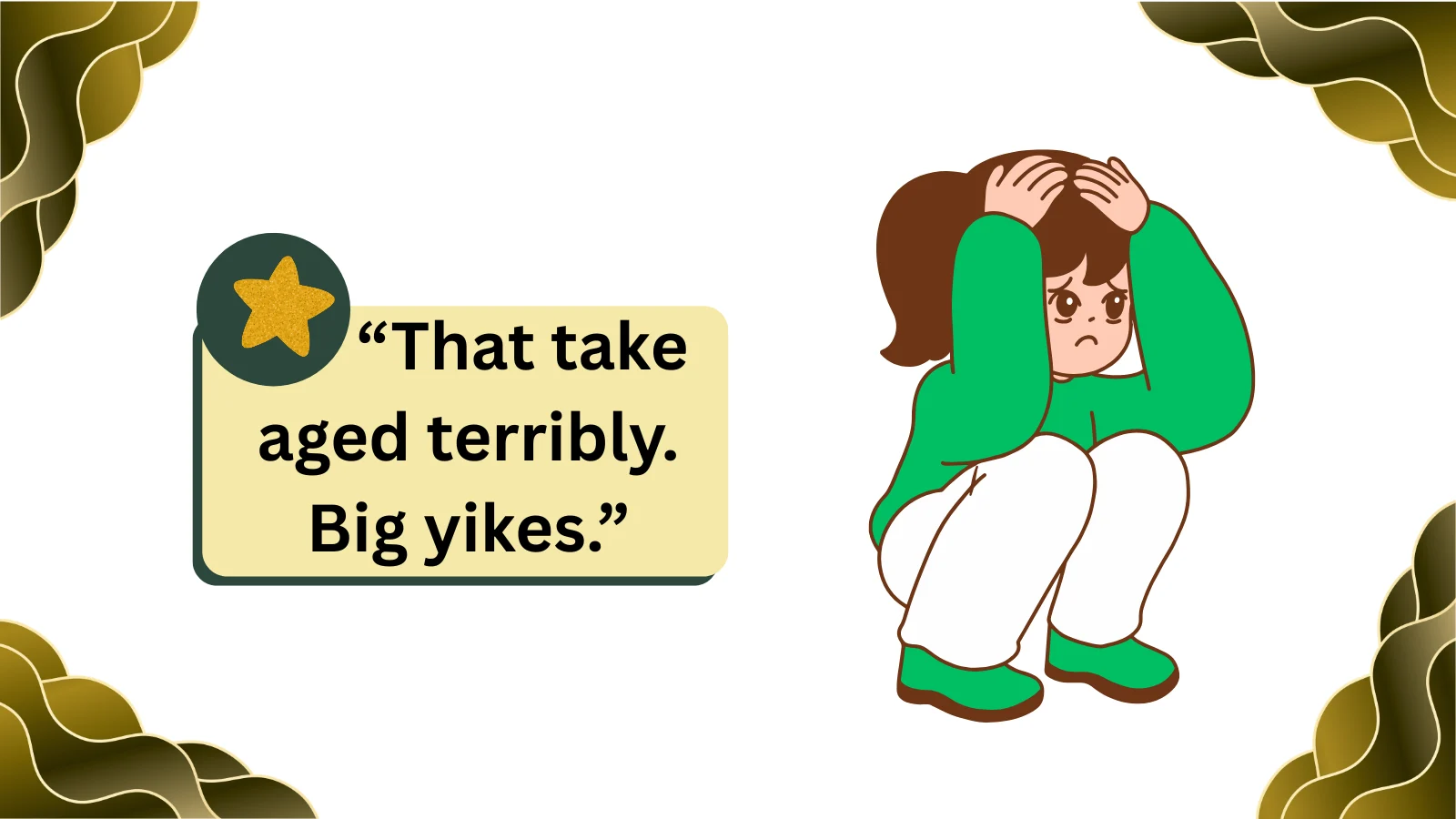
- “That take aged terribly. Big yikes.”
Discord message
- “Bro doubled down instead of apologizing. Big yikes.”
Instagram caption
- “When you reread your old tweets… big yikes.”
Private DM
- “That interview clip was painful. Big yikes.”
These examples show how the phrase conveys reaction without over-explaining.
Similar Slang Words or Expressions
Several slang expressions carry a similar emotional tone to big yikes, including:
- Yikes – A milder reaction to discomfort or surprise
- Oof – Expresses sympathy or secondhand pain
- Cringe – Directly labels something embarrassing
- That’s rough – A softer, empathetic response
- Awkward – Neutral acknowledgment of discomfort
- Side-eye – Implied judgment or skepticism
Each varies slightly in tone, but all function as emotional shorthand in texting slang.
Big Yikes vs Similar Terms
Big yikes vs cringe
Big yikes reacts to the situation, while cringe labels the content itself as embarrassing.
Big yikes vs oof
Oof is often sympathetic, whereas big yikes leans more judgmental or ironic.
Big yikes vs awkward
Awkward is neutral and descriptive; big yikes adds emotional intensity and humor.
Is It Formal or Informal?
Big yikes is strictly informal.
- Casual texting: Yes
- Social media: Very common
- Professional settings: No
- Academic writing: Never appropriate
It’s best reserved for relaxed digital spaces where slang and tone are understood.
Frequently Asked Questions
Is big yikes Gen Z slang?
Yes. While older generations recognize “yikes,” big yikes as a phrase is strongly associated with Gen Z internet slang, meme culture, and casual digital reactions, especially on TikTok, Discord, and social platforms.
Is big yikes trending on TikTok?
Big yikes continues to appear frequently in TikTok comments and captions. While not a viral catchphrase, it remains a stable reaction term used to respond to awkward clips, controversial opinions, or uncomfortable moments.
Can big yikes refer to a person?
Indirectly, yes. When someone says “big yikes” about a person’s behavior, they’re reacting to that behavior rather than labeling the person themselves. It’s a judgment of actions, not identity.
Is big yikes sarcastic?
Often, yes. The phrase commonly carries sarcasm or irony, especially online. The speaker usually isn’t genuinely shocked but is signaling disbelief, secondhand embarrassment, or mild disapproval.
Is big yikes offensive?
Generally no. However, it can feel dismissive or judgmental depending on context. It’s not considered a slur or explicit insult, but tone matters in sensitive conversations.
Is big yikes commonly used in texting?
Yes. It’s widely used in informal texting, group chats, and DMs as a quick emotional response. It works best when both parties understand internet slang and meme-based humor.
Does big yikes mean something bad happened?
Not always. It usually means something awkward, embarrassing, or uncomfortable occurred, not necessarily something serious or harmful.
Can big yikes be playful?
Absolutely. In many cases, it’s used humorously or lightly to acknowledge minor cringe moments rather than serious issues.
Quick Summary
- Big yikes is internet and texting slang
- It expresses strong secondhand embarrassment or discomfort
- It’s a heightened version of “yikes”
- Common in Gen Z digital communication and meme culture
- Informal, sarcastic, and context-dependent
- Used across texts, comments, and social media
One-sentence definition:
Big yikes is a slang reaction used in chat and texting to express heightened discomfort, embarrassment, or disbelief in a humorous or ironic way.
Final Thoughts
Language online evolves fast, but big yikes has stuck around because it perfectly captures modern digital reactions quick, emotional, and slightly judgmental without being aggressive.
Understanding its meaning helps decode tone in texts and social media, especially when humor and irony do the heavy lifting in online conversations.
Leave a Reply