If you’ve ever seen someone called “salty” in a group chat, TikTok comment, or meme thread and wondered what it really means, you’re not alone.
The phrase salty meaning in chat has evolved far beyond its literal roots and is now a staple of internet slang.
In modern texting, social media, and digital communication, “salty” describes emotions, reactions, and attitudes often with humor or sarcasm.
This guide breaks down the literal definition, slang usage, tone, examples, and how Gen Z actually uses “salty” online in 2026.
What Does Salty Mean in Chat?
In chat and texting slang, salty means feeling annoyed, bitter, resentful, or emotionally pressed usually over something small or embarrassing. As internet slang, it’s metaphorical rather than literal and often used playfully to call out someone who’s overreacting, being petty, or clearly bothered in digital conversations.
Literal Meaning of Salty
Literally, salty describes the taste of salt or food containing salt. The word comes from Old English sealt, historically linked to preservation, flavor, and even value. Outside slang, it can also describe seawater or environments high in salt. This traditional definition has nothing to do with emotions but it heavily influences the metaphorical slang meaning used online today.
How Is Salty Used as Slang Online?
As slang, salty is an emotional and cultural expression used across texting slang and social media. It suggests that someone’s emotions are “strong,” “sharp,” or “lingering,” much like salt’s taste.
Gen Z and younger millennials use “salty” heavily on TikTok, Discord, X, Instagram comments, and gaming chats. The tone can vary depending on context:
- Sarcastic: lightly teasing someone who lost or got called out
- Emotional: pointing out bitterness after rejection or failure
- Ironic: exaggerating minor annoyance for humor
- Playful: joking between friends without real hostility
In digital communication, calling someone salty doesn’t always mean insult it often signals awareness of emotional overreaction in a humorous way.
Is Salty Commonly Used in Texting?
Yes, salty is very common in texting, especially in casual and social settings. It’s not new slang, but it remains relevant because it adapts well to memes, reactions, and short form content. While it’s less trendy than newer terms, it’s still widely understood and frequently used in group chats, gaming communities, and comment sections where emotional reactions are being discussed.
Examples of Salty in Text Messages
Texting & Chat Examples
- “Why are you so salty about losing one game?”
- “He left me on read and now he’s acting salty.”
- “Not you being salty over a joke 😭”
- “She’s lowkey salty but won’t admit it.”
- “Bro sounds salty for no reason.”
Mini Chat Conversations
- A: “I got promoted 👀”
- B: “Must be nice.”
- A: “Why are you being salty?”
- A: “They picked my idea instead.”
- B: “You okay?”
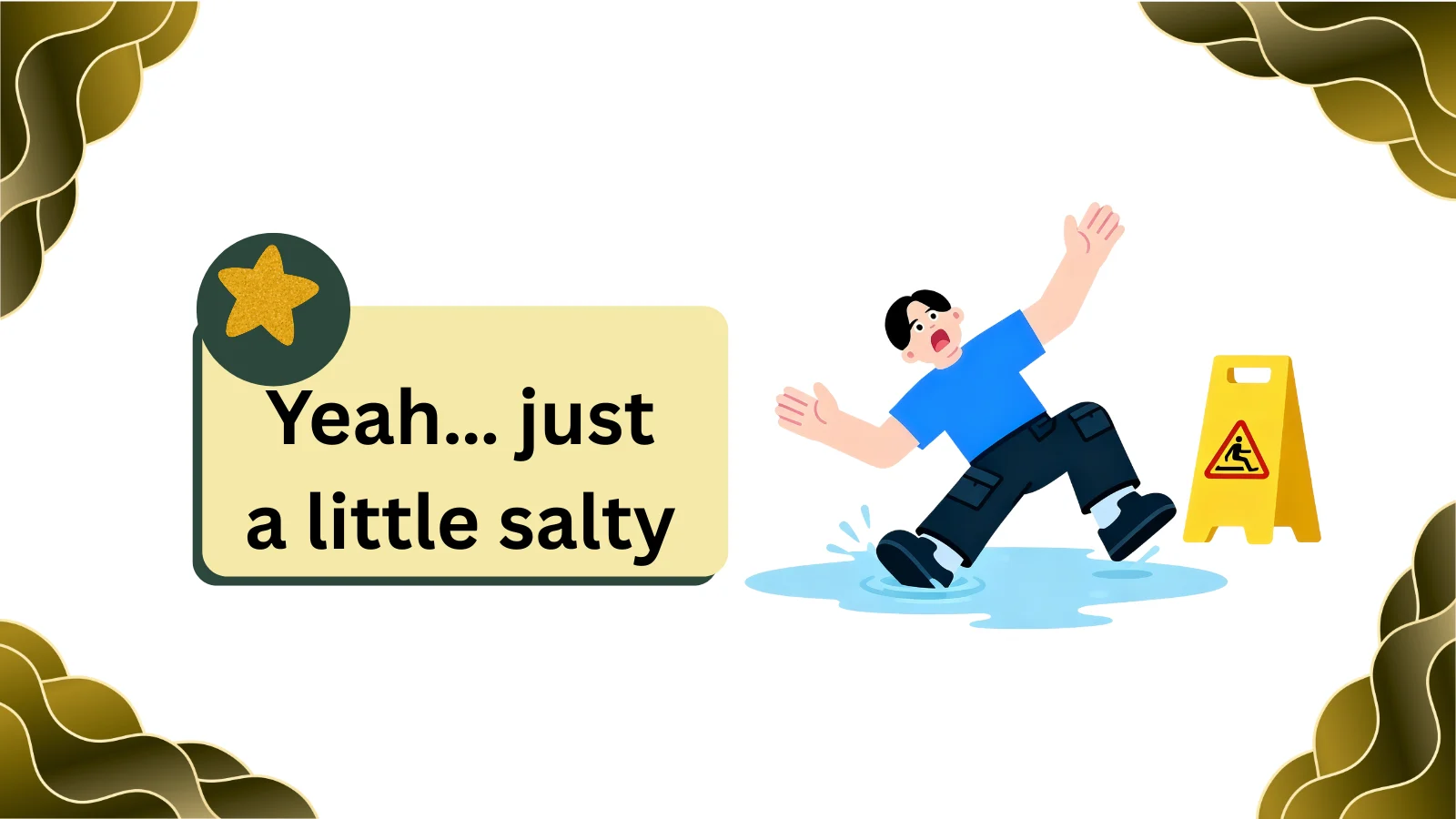
- A: “Yeah… just a little salty.”
Social Media Caption Examples
- “Still salty about last night but we move on.”
- “Salty energy but make it funny.”
- “When you pretend you’re fine but you’re actually salty.”
These examples show how natural and flexible the slang feels in modern communication.
Similar Slang Words or Expressions
Several slang terms overlap with the salty slang meaning, depending on tone and intensity:
- Bitter: stronger and more negative than salty
- Pressed: emotionally bothered or defensive
- Mad: angry, often more direct
- Petty: focused on small grievances
- Triggered: emotionally reactive, sometimes exaggerated
Each carries slightly different emotional weight, but all operate in similar digital contexts.
Salty vs Similar Terms
Salty vs Bitter
Salty is lighter and often humorous, while bitter suggests deeper resentment that lasts longer.
Salty vs Pressed
Pressed implies defensiveness or insecurity; salty leans more toward annoyance or playful frustration.
Salty vs Mad
Mad is straightforward anger. Salty often hides behind jokes, sarcasm, or passive comments.
These distinctions help explain why “salty” remains popular it softens emotional callouts without sounding too aggressive.
Is It Formal or Informal?
Salty is firmly informal.
- Casual: Yes, very common
- Professional: No, avoid in work settings
- Academic: Not appropriate
- Social media: Extremely common
It’s best used among friends, online communities, or informal digital spaces where slang is expected.
Frequently Asked Questions
Is salty Gen Z slang?
Salty predates Gen Z, but Gen Z helped modernize and popularize it online. They use it heavily in memes, gaming chats, and short-form video captions, keeping the slang relevant in 2026 digital culture.
Is salty trending on TikTok?
Salty isn’t a viral “new” trend, but it appears consistently in TikTok comments and captions. It’s a stable slang term that fits reaction-based content and emotional storytelling.
Can salty refer to a person?
Yes. Calling someone salty means they’re acting annoyed, bitter, or emotionally bothered usually over something minor or embarrassing.
Is salty sarcastic?
Often, yes. Salty is frequently used sarcastically to point out emotional reactions in a humorous or teasing way rather than as a serious insult.
Is salty offensive?
Generally no. It’s considered mild slang. However, tone matters used aggressively, it can feel dismissive or invalidating.
Is salty commonly used in texting?
Absolutely. It’s widely used in texting slang, especially in group chats, gaming conversations, and reaction based messages.
Does salty always mean angry?
Not always. It can mean annoyed, disappointed, embarrassed, or jokingly upset rather than full on anger.
Quick Summary
- Salty in chat means annoyed, bitter, or emotionally pressed
- It’s metaphorical internet slang, not literal
- Common in texting, memes, gaming, and social media
- Tone ranges from playful to sarcastic
- Informal and not suitable for professional contexts
One-sentence definition:
In modern digital communication, salty describes someone who’s visibly bothered or resentful often in a humorous or sarcastic way rather than serious anger.
Final Thoughts
The salty meaning in chat perfectly captures how modern slang turns everyday words into emotional shortcuts.
Its staying power comes from flexibility it can tease, empathize, or lightly call someone out without escalating conflict.
As long as people keep reacting emotionally online, “salty” will continue to season internet conversations well beyond 2026.
Leave a Reply