If you’ve ever sent a message and received a dry “fine” in response, you already know that what does fine mean in text is not as simple as it sounds.
In modern texting, chat apps, and social media, “fine” can signal anything from genuine contentment to passive aggressive frustration.
This guide breaks down the literal meaning, slang meaning, emotional tone, and real world usage of “fine” in digital communication, so you can finally decode what someone really means when they type it.
What Does Fine Mean in Chat?
What does fine mean in text refers to a flexible piece of texting slang that can mean okay, acceptable, emotionally neutral, or emotionally loaded depending on tone and context. In internet slang, “fine” often carries implied meaning ranging from genuine agreement to quiet annoyance making it more metaphorical than literal in chat conversations.
Literal Meaning of Fine
In its traditional, dictionary sense, fine means good, satisfactory, or free from problems. The word comes from Latin finis, meaning “end” or “boundary,” and evolved to describe something that meets an acceptable standard. Literally, when someone says they are “fine,” they are stating that nothing is wrong or that a situation is adequate.
How Is Fine Used as Slang Online?
Online, fine rarely stays neutral. In texting slang and social media expression, it often functions as emotional shorthand. Gen Z and Millennials use “fine” to compress feelings they don’t want to fully explain.
On platforms like TikTok, Discord, Snapchat, and Instagram DMs, “fine” can be:
- Emotionally guarded
- Sarcastic or ironic
- Passive-aggressive
- Emotionally dismissive
- A conversation-ender
This figurative meaning is shaped by tone, punctuation, message length, and timing. A one-word “fine” hits very differently than “I’m fine lol.”
Is Fine Commonly Used in Texting?
Yes — fine is extremely co mmon in texting, but its meaning is context-dependent. It’s one of the most frequently misunderstood emotional slang terms because it appears neutral while often signaling something deeper.
You’ll see it most on:
- Text messages and WhatsApp
- Instagram and Snapchat replies
- Discord chats
- Relationship and friendship conversations
Despite its simplicity, “fine” is popular precisely because it allows emotional distance without confrontation.
Examples of Fine in Text Messages
Here’s how fine actually shows up in real digital conversations:
Example 1
A: “Are you mad at me?”
B: “I’m fine.”
Example 2
A: “Do you want to talk about it?”
B: “No, it’s fine.”
Example 3
A: “Did that comment bother you?”
B: “Fine. Whatever.”
Example 4
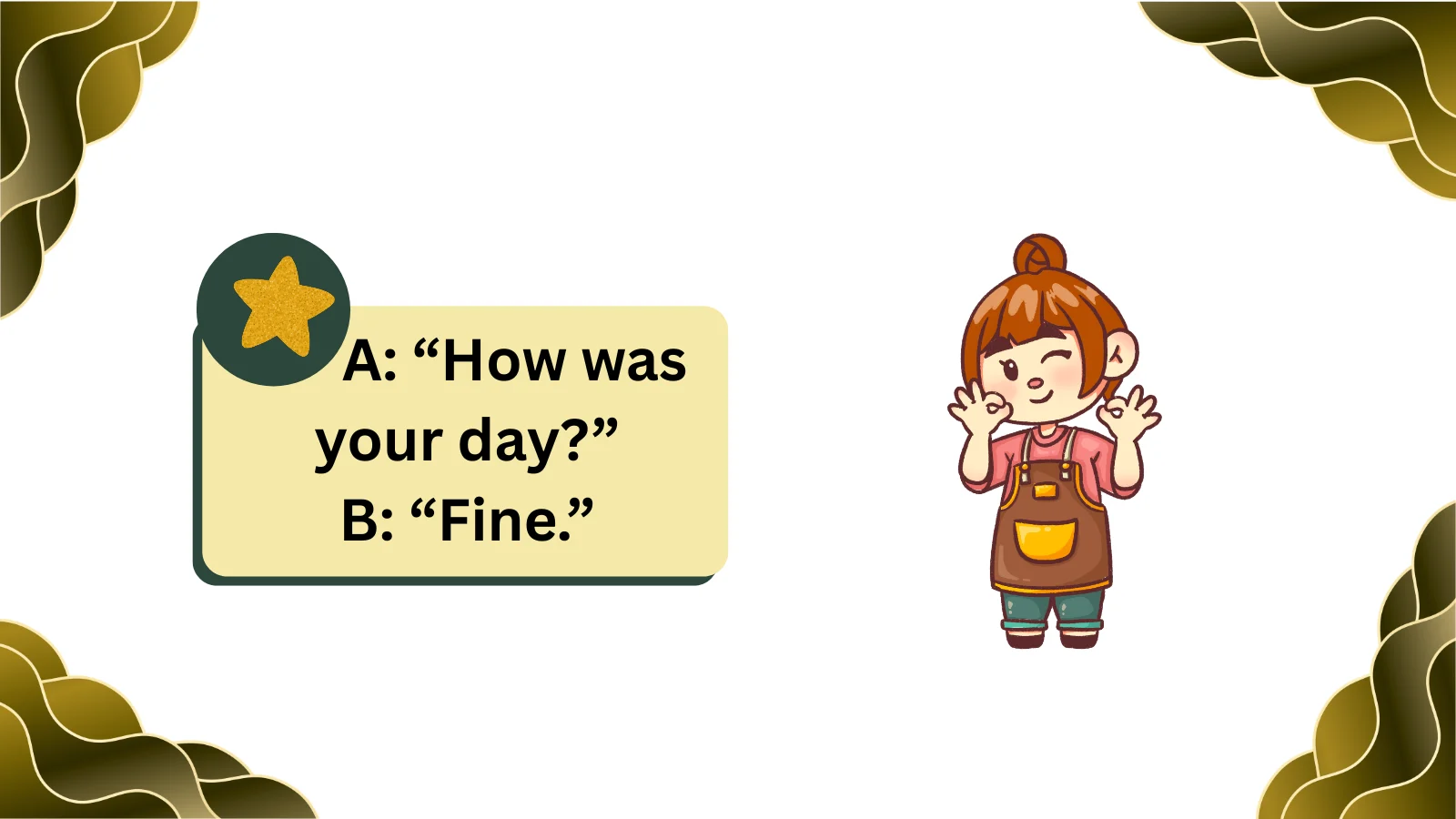
A: “How was your day?”
B: “Fine.”
Example 5 (Social caption)
“Yeah I’m fine 🙂”
Example 6
A: “Can we reschedule?”
B: “Fine.”
Example 7 (Ironic)
“Everything’s fine 🔥🐶”
These examples show how fine in text messages often hides emotion instead of expressing it directly.
Similar Slang Words or Expressions
Several slang expressions function similarly to “fine” in digital communication:
- Okay – Neutral or emotionally closed
- Whatever – Dismissive or annoyed
- It’s cool – Casual agreement or forced calm
- All good – Genuine reassurance or surface-level calm
- Meh – Indifference or low energy
- I’m good – Can mean satisfied or emotionally done
Each carries subtle emotional cues depending on context.
Fine vs Similar Terms
Fine vs Okay
“Okay” tends to sound more neutral, while “fine” often implies emotional restraint or suppressed feelings.
Fine vs Whatever
“Whatever” is more openly dismissive. “Fine” is quieter and more socially acceptable.
Fine vs All Good
“All good” usually signals reassurance. “Fine” may signal unresolved emotion.
Is It Formal or Informal?
Fine is informal in texting and chat contexts.
- Casual texting: Very common
- Social media: Widely used, often ironic
- Professional messages: Can sound vague or emotionally closed
- Academic writing: Avoided
In digital communication, “fine” works best in casual or personal contexts, not formal or professional ones.
Frequently Asked Questions
Is fine Gen Z slang?
Not originally, but Gen Z uses “fine” as emotional slang, often layered with irony or passive resistance. It’s less about the word itself and more about how it’s delivered in text.
Is fine trending on TikTok?
Yes. “Fine” appears frequently in TikTok captions and memes, especially in ironic formats like “I’m fine” paired with chaotic visuals.
Can fine refer to a person?
Yes. Saying someone is “fine” can also mean attractive, though this meaning is usually clear from context and tone.
Is fine sarcastic in texts?
Often, yes. A short or abrupt “fine” can signal sarcasm, annoyance, or emotional shutdown.
Is fine offensive?
No. It’s not offensive, but it can feel dismissive or emotionally cold depending on the situation.
Is fine commonly used in texting?
Extremely. It’s one of the most common yet emotionally ambiguous words in digital communication.
Does punctuation change the meaning of fine?
Yes.
“Fine.” feels colder than “fine,” and “fine lol” feels softer or ironic.
Quick Summary
- What does fine mean in text: A flexible word signaling okay-ness, restraint, or hidden emotion
- Literal meaning: Satisfactory or acceptable
- Slang meaning: Emotionally loaded, often passive or ironic
- Usage: Very common in texting and chat
- Tone: Depends on context, punctuation, and timing
One-sentence definition:
In texting slang, fine often means “okay” on the surface but can hide frustration, sarcasm, or emotional distance underneath.
Final Thoughts
“Fine” is one of the most deceptively powerful words in texting culture.
It looks harmless, but in digital communication, it often carries emotional weight far beyond its letters.
Understanding what does fine mean in text helps you read between the lines, avoid misunderstandings, and respond with emotional intelligence in modern chat conversations.
Leave a Reply