Category: Text in meaning

  • Powerful Wyd Meaning in Text That Still Cracks Up Fans Today

    Powerful Wyd Meaning in Text That Still Cracks Up Fans Today

    The phrase wyd meaning in chat has become one of the most common texting slang expressions across social media, especially among Gen Z users on Snapchat, TikTok, Instagram, and Twitter/X.

    In this guide, we’ll break down the literal meaning, slang usage, emotional tone, real life texting examples, and how “wyd” fits into modern digital communication in 2026.

    What Does Wyd Mean in Chat?

    Wyd in chat is a texting slang abbreviation for “what are you doing?” It’s commonly used in casual digital communication to ask about someone’s current activity, start a conversation, or check in emotionally. The meaning is literal but often carries playful, flirty, or curious undertones in internet slang.

    Literal Meaning of Wyd

    Literally, wyd stands for “what are you doing.”

    It’s a shortened form created for fast typing in text messages and social media conversations. The abbreviation emerged in early SMS culture and became mainstream with the rise of instant messaging apps like Snapchat, WhatsApp, and Twitter.

    How Is Wyd Used as Slang Online?

    As slang, wyd goes far beyond a simple question. In digital communication, it often functions as:

    • A conversation starter
    • A way to show interest
    • A subtle check-in
    • A flirty or bored message

    Among Gen Z, “wyd” appears constantly in meme culture, TikTok captions, Discord chats, and late-night texts.

    Tone varies based on context:

    • Curious: wanting to know what someone’s up to
    • Playful: hinting at hanging out
    • Ironic: posted in memes for humor
    • Emotional: checking in on someone

    In social media expression, “wyd” acts as emotional slang rather than just a literal question.

    Is Wyd Commonly Used in Texting?

    Yes — wyd is extremely common in texting.

    It’s one of the most widely used internet slang terms across:

    • Snapchat streaks
    • Instagram DMs
    • TikTok comments
    • Twitter/X posts
    • iMessage and WhatsApp

    Rather than trending briefly, “wyd” has become a permanent part of digital language, especially among teens and young adults.

    Examples of Wyd in Text Messages

    Here are modern, realistic examples of how “wyd” appears in everyday chats:

    Example 1 (casual):
    A: wyd rn
    B: just watching Netflix, you?

    Example 2 (flirty):
    A: wyd tonight 👀
    B: depends… what you got in mind?

    Example 3 (friendly check-in):
    A: hey wyd today?
    B: school then gym

    Example 4 (bored tone):
    A: wyd 😭
    B: literally nothing, I’m so bored

    Example 5 (late night):
    A: wyd up so late
    B: overthinking as usual

    Social caption example:
    “3am and still awake… wyd life 😩”

    Meme-style usage:
    “Me staring at my phone waiting for someone to text wyd”

    Similar Slang Words or Expressions

    Several slang phrases carry similar meanings to “wyd” in texting culture:

    • WYA – where you at
    • Sup – what’s up
    • Hbu – how about you
    • Whatcha doing – casual version of asking activities
    • You busy? – modern check-in phrase

    All serve as conversation starters in digital communication.

    Wyd vs Similar Terms

    Wyd vs What’s Up

    “What’s up” is broader and can refer to life in general, while wyd focuses specifically on what someone is doing right now.

    Wyd vs You Busy

    “You busy?” checks availability, while wyd asks about current activity and often opens the door to hanging out or chatting.

    Wyd vs WYA

    WYA asks about location, while wyd asks about action or activity.

    Is It Formal or Informal?

    Wyd is completely informal.

    Usage breakdown:

    • Casual texting: ✅ very common
    • Social media: ✅ extremely popular
    • Professional emails: ❌ never appropriate
    • Academic writing: ❌ not suitable

    It belongs strictly to slang-based digital communication.

    Frequently Asked Questions

    Is wyd Gen Z slang?

    Yes, “wyd” is strongly associated with Gen Z texting culture, though millennials also use it. It became mainstream through Snapchat, TikTok, and meme culture, where quick abbreviations dominate digital conversations.

    Is wyd trending on TikTok?

    While “wyd” isn’t a short-term trend, it consistently appears in TikTok captions, comment sections, and viral memes. It’s considered a permanent part of modern internet slang rather than a temporary buzzword.

    Can wyd refer to a person?

    No, “wyd” doesn’t refer to a person. It strictly asks about someone’s activity or what they’re currently doing, though emotionally it can imply interest or wanting attention.

    Is wyd sarcastic?

    It can be. Depending on context, “wyd” may be playful, ironic, bored, or serious. Memes often use it sarcastically, while texts between friends or crushes usually carry genuine curiosity.

    Is wyd offensive?

    No, “wyd” is not offensive at all. It’s a neutral and friendly slang abbreviation commonly used in everyday digital communication.

    Is wyd commonly used in texting?

    Absolutely. It’s one of the most frequently used abbreviations in texting across messaging apps and social platforms, especially among younger users.

    Does wyd always mean what are you doing?

    Yes, in nearly all cases, “wyd” directly means “what are you doing,” though emotional tone and intention can shift based on context.

    Quick Summary

    • Wyd means “what are you doing” in chat and texting slang
    • It’s a casual internet abbreviation used to start conversations
    • Common on Snapchat, TikTok, Instagram, and Twitter/X
    • Can feel playful, flirty, bored, or curious
    • Always informal and part of modern digital language

    One-sentence definition:
    Wyd is a popular texting slang term that means “what are you doing,” used casually in digital communication to ask about someone’s current activity or start a conversation.


    Final Thoughts

    In today’s online culture, “wyd” has evolved from a simple shortcut into a core part of how people connect through text.

    Whether it’s used to flirt, check in, or kill boredom, understanding the wyd meaning in chat helps decode modern internet slang and social media conversations in 2026.
  • Powerful Dissociation Meaning in Text Explained in a Powerful Way

    Powerful Dissociation Meaning in Text Explained in a Powerful Way

    In today’s texting culture, slang words often evolve far beyond their original psychological or medical meanings and dissociation meaning in text is a perfect example of that shift.

    While dissociation is a real mental health term, Gen Z and online communities now use it casually in chats, memes, TikTok captions, and digital conversations to describe zoning out, emotional detachment, or feeling disconnected.

    This guide breaks down the literal meaning, internet slang usage, real texting examples, and how people actually use dissociation in modern communication.


    What Does Dissociation Mean in Chat?

    In texting slang and internet slang, dissociation usually means mentally checking out, zoning out, or feeling emotionally disconnected from a moment, conversation, or reality often in a casual or humorous way rather than a clinical one.

    It’s a figurative expression used in digital communication to describe feeling overwhelmed, bored, stressed, or detached.


    Literal Meaning of Dissociation

    Dissociation is a psychological term that refers to a mental process where a person disconnects from their thoughts, feelings, memories, or sense of identity.

    It commonly appears in mental health contexts related to stress, trauma, or anxiety and includes experiences like daydreaming, depersonalization, or feeling “not present.”

    Originally rooted in psychology and neuroscience, dissociation describes a real coping response not slang.


    How Is Dissociation Used as Slang Online?

    Online, dissociation has evolved into emotional slang that’s far more casual than its clinical meaning. Gen Z and internet culture use it metaphorically to describe moments of mental drift, emotional overload, or tuning out.

    You’ll often see it on:

    • TikTok storytimes
    • Twitter/X memes
    • Discord chats
    • Instagram captions
    • Group texts

    Tone can be:

    • Sarcastic — “brb dissociating”
    • Emotional — expressing overwhelm
    • Humorous — making light of stress
    • Relatable — bonding over burnout

    In social media expression, dissociation often replaces phrases like “I zoned out,” “I’m mentally gone,” or “my brain left the chat.”


    Is Dissociation Commonly Used in Texting?

    Yes — but in a semi-niche way.

    Dissociation isn’t everyday slang like “lol” or “brb,” but it’s increasingly common among Gen Z and online mental health–aware communities. It’s especially popular in meme culture and emotional digital communication.

    You’ll see it most on:

    • TikTok comments
    • Twitter/X threads
    • Discord servers
    • Private friend group chats

    It’s trendy, relatable, and often used jokingly rather than literally.


    Examples of Dissociation in Text Messages

    Friend Chat

    A: “Did you hear what the teacher just said?”
    B: “Nope I was fully dissociating 💀”

    Group Text

    “Sorry I didn’t reply I was dissociating for like an hour”

    TikTok Caption

    “When the stress hits and you start dissociating mid conversation”

    DM Conversation

    A: “You okay?”
    B: “Yeah just dissociating a little lol”

    Snap Message

    “Me dissociating while everyone else is having fun”

    Tweet Style

    “Nothing like dissociating during a boring meeting”

    Casual Text

    “My brain said bye and started dissociating”


    Similar Slang Words or Expressions

    Some related emotional or internet slang includes:

    • Zoning out – mentally drifting away
    • Mentally gone – not paying attention
    • Checked out – emotionally detached
    • Brain fog – feeling unfocused or slow
    • Shutdown mode – overwhelmed and quiet
    • Overstimulated – too much sensory input

    These expressions capture similar feelings of detachment or mental distance in digital conversations.


    Dissociation vs Similar Terms

    Dissociation vs Zoning Out

    Zoning out usually means simple distraction or boredom. Dissociation online often implies emotional overwhelm or deeper mental disconnect — even if said jokingly.

    Dissociation vs Burnout

    Burnout refers to long-term exhaustion. Dissociation is more about a moment of mental disconnection, though the two often overlap in internet slang.

    Dissociation vs Daydreaming

    Daydreaming is light and imaginative. Dissociation slang suggests emotional detachment or stress-related zoning out.


    Is It Formal or Informal?

    Dissociation in texting is highly informal.

    Usage by context:

    • Casual chats ✅
    • Social media captions ✅
    • Memes & jokes ✅
    • Professional settings ❌
    • Academic writing (literal meaning only) ✅

    When used in slang, it’s never appropriate for formal communication.


    Frequently Asked Questions

    Is dissociation Gen Z slang?

    Yes. While dissociation is a clinical term, Gen Z has adopted it as emotional internet slang to describe zoning out, stress, or mental disconnection in a casual and relatable way.


    Is dissociation trending on TikTok?

    Yes. Dissociation appears frequently in TikTok captions, mental health content, memes, and storytimes where creators describe feeling overwhelmed or mentally checked out.


    Can dissociation refer to boredom?

    Sometimes. In slang usage, people may say they’re dissociating when bored, but it often implies emotional overload or stress rather than simple disinterest.


    Is dissociation sarcastic in texting?

    Often yes. Many people use it humorously or sarcastically, like “brb dissociating,” to exaggerate feeling mentally gone during awkward or stressful moments.


    Is dissociation offensive?

    No, but it should be used respectfully. Since it’s rooted in mental health, some people prefer not to trivialize it — though casual usage is now common online.


    Is dissociation commonly used in daily texts?

    It’s popular among Gen Z and online communities but not universal slang. It appears more in meme culture and emotional conversations than everyday texting.


    Does dissociation always mean a mental health issue online?

    No. In slang, it’s usually figurative and casual, not a literal psychological condition.


    Quick Summary

    • Dissociation meaning in text: mentally checking out or feeling emotionally disconnected
    • Used as internet slang, not clinical diagnosis
    • Common in Gen Z chats, TikTok, memes, and DMs
    • Often sarcastic, humorous, or relatable
    • Literal meaning refers to psychological disconnection

    One-line definition:
    In texting slang, dissociation means zoning out or mentally disconnecting from a moment usually used casually or humorously online.


    Final Thoughts

    The evolution of dissociation from a clinical psychology term into a widely used internet expression shows how digital culture reshapes language.

    In chats and social media, it no longer strictly signals a mental health condition instead, it captures that modern feeling of being overwhelmed, mentally tired, or emotionally checked out.

  • What Does Tea Mean in Slang? Ultimate Guide for Teens

    If you’ve been scrolling TikTok, Discord, or even texting friends, you’ve probably seen someone say they “spill the tea” or ask, “What’s the tea?”

    But what does tea mean in slang?

    In modern digital communication, this term has evolved far beyond its literal sense.

    This guide will explain the literal and figurative meanings of tea, show how Gen Z and internet users use it online, and give real texting examples so you can stay in the loop.


    What Does Tea Mean in Chat?

    In texting slang, tea refers to gossip, juicy information, or the latest news about someone or something. It’s primarily metaphorical, used when sharing or asking for personal or social updates. In social media and chat, saying “spill the tea” signals a desire to hear insider info or drama in a humorous, casual way.


    Literal Meaning of Tea

    Literally, tea is a beverage made from steeped leaves of the Camellia sinensis plant. Its origin traces back thousands of years to China, later spreading globally. While the literal meaning is neutral and everyday, internet slang transforms it into a metaphor for social or emotional “intake,” much like taking in gossip or stories.


    How Is Tea Used as Slang Online?

    Online, tea has become a texting slang staple. Gen Z, meme culture, and platforms like TikTok, Discord, and Instagram frequently use it in humorous, sarcastic, or ironic tones. It can denote juicy gossip, shocking news, or relatable personal experiences. Common contexts include:

    • Social media expression: Used in captions or memes to indicate drama.
    • Digital communication: Shows curiosity or invites conversation in group chats.
    • Emotional slang: Sometimes combined with reactions like laughing, crying, or shocked emojis.
    • Figurative meaning: “Spilling the tea” isn’t about beverages; it’s sharing secrets, truth, or news.

    Example: “Omg, spill the tea on what happened at the party 😳☕”


    Is Tea Commonly Used in Texting?

    Yes, tea is widely used but context-dependent. It’s popular among Gen Z and Millennials for informal, playful conversations. It appears on:

    • TikTok trends and comments
    • Twitter/X threads
    • Discord servers
    • Instagram captions and DMs

    While not formal, it’s trending, ironic, and sometimes niche depending on the group.


    Examples of Tea in Text Messages

    Here are realistic 2026-style chat examples:

    1. Friend 1: “Did you hear about Alex?”
      Friend 2: “No, spill the tea ☕👀”
    2. Texting a group: “Tea time! Who knows what really happened at the concert?”
    3. Social media caption: “When your bestie spills the tea and you’re here for it 😭☕”
    4. DMs: “Okay, I’ve got some tea… but you can’t tell anyone 😏”
    5. Discord chat: “This server has so much tea today, I can’t keep up 😅”
    6. Story update: “New episode dropped and the tea is 🔥”

    Similar Slang Words or Expressions

    Other expressions that convey similar meanings include:

    • Receipts: Evidence or proof of drama.
    • Shade: Indirect criticism or subtle insults.
    • Tea sis: Informal way to ask someone to spill gossip.
    • Spill: A shorter, casual form of “spill the tea.”

    Each shares the social and figurative aspect of sharing news, secrets, or emotional content.


    Tea vs Similar Terms

    Tea vs Therapy: Tea is casual and social; therapy is formal and personal.
    Tea vs Coping Mechanism: Tea can be entertaining or emotional gossip, whereas coping mechanisms are personal strategies.
    Tea vs Comfort Item: Tea as gossip is figurative, not a physical comfort item, but it can provide social “relief” or entertainment.


    Is It Formal or Informal?

    Tea in slang is entirely informal:

    • ✅ Casual texting, DMs, memes
    • ✅ Social media posts
    • ❌ Not suitable for academic, professional, or formal writing

    It thrives in playful, ironic, and social contexts.


    Frequently Asked Questions (FAQ)

    Is tea Gen Z slang?
    Yes, tea is widely used by Gen Z as a slang term for gossip or shocking news, especially on TikTok, Instagram, and Discord.

    Is tea trending on TikTok?
    Absolutely. Many viral TikTok trends involve “spilling the tea” about celebrity drama, fandom events, or relatable life stories.

    Can tea refer to a person?
    Not directly. Tea usually refers to information, gossip, or stories, not individuals.

    Is tea sarcastic?
    It can be. Depending on tone and context, it can be ironic, humorous, or dramatic.

    Is tea offensive?
    No, tea is neutral. However, gossip shared through tea can sometimes hurt feelings.

    Is tea commonly used in texting?
    Yes, particularly in informal, playful, or social group conversations.

    What does tea mean in social media captions?
    It signals drama, juicy info, or emotional storytelling, often paired with emojis.


    Quick Summary

    • Definition: Tea = gossip, juicy info, or shocking news (slang); literally, a beverage.
    • Metaphorical use: Common in texting, memes, and digital chats.
    • Platforms: TikTok, Discord, Instagram, Twitter/X.
    • Tone: Casual, humorous, ironic, sometimes emotional.
    • Literal vs Slang: Literal = drink; slang = social info or drama.

    Final Thoughts:

    Understanding tea in texting slang keeps you current with Gen Z culture, social media trends, and online conversations.

    Next time someone says “spill the tea,” you’ll know exactly what they mean!

  • What does twin mean in slang viral meaning explained today!

    What does twin mean in slang viral meaning explained today!

    If you’ve seen someone say “that’s my twin” or call a friend “twin” in a text or comment, you’re not alone.

    The phrase has exploded across texting, social media, and internet slang, especially among Gen Z.

    In this guide, we break down what does twin mean in slang, how it’s used in chat, where it came from, and what people really mean when they say it online.

    Whether you saw it on TikTok, Discord, or in a DM, this article explains it clearly.

    What Does Twin Mean in Chat?

    In texting slang and internet slang, twin means someone who is extremely similar to you in personality, thoughts, humor, or behavior. It’s a metaphorical expression, not literal, used in digital communication to show deep relatability, emotional alignment, or shared vibes between people.

    Literal Meaning of Twin

    Literally, a twin is one of two siblings born from the same pregnancy. The word comes from Old English twinn, meaning “twofold” or “double.” In its traditional sense, it refers to biological twins who share a close genetic and developmental connection.

    How Is Twin Used as Slang Online?

    As slang, twin evolved into a figurative term used in online culture. Gen Z uses it to describe someone who thinks, reacts, or feels exactly the same way they do. It’s common in meme culture, TikTok comments, and casual texting.

    In digital communication, calling someone “twin” can express:

    • Shared opinions or identical reactions
    • Emotional understanding
    • Matching humor or mindset
    • Instant connection

    The tone can be affectionate, humorous, ironic, or slightly exaggerated depending on context. It’s a social media expression that signals closeness without needing a long explanation.

    Is Twin Commonly Used in Texting?

    Yes, twin is commonly used in texting, especially among Gen Z and younger millennials. It’s most popular on TikTok, Instagram comments, Snapchat, and Discord chats. While not universal, it’s well understood in online spaces and continues to trend as casual emotional slang.

    Examples of Twin in Text Messages

    Here are realistic examples of how twin appears in modern chats:

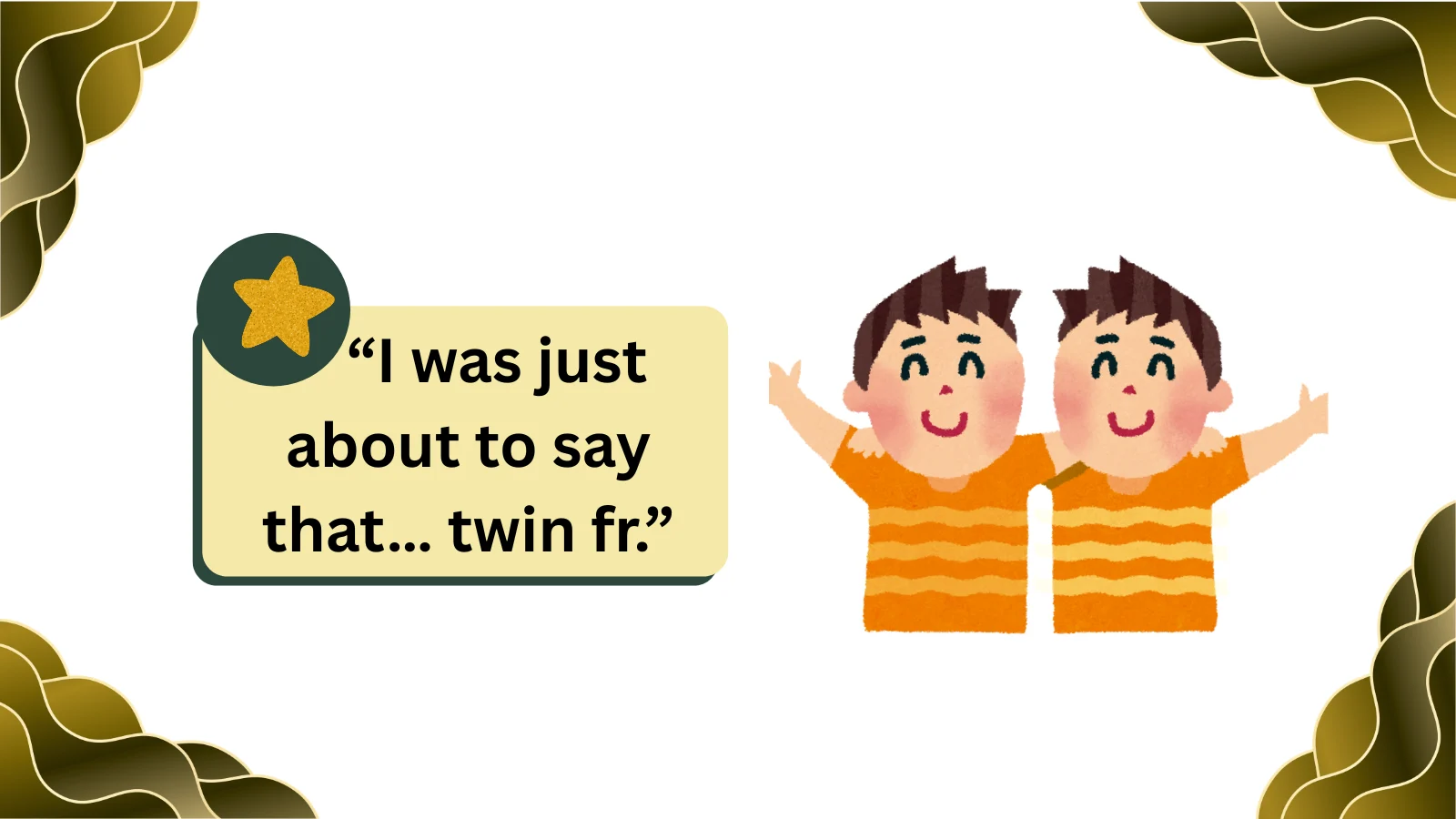
    • “I was just about to say that… twin fr.”
    • “We both hate the same thing, that’s my twin.”
    • “Why do you think exactly like me, twin?”
    • “This song? Yeah twin, you get it.”
    • “We’re matching moods again. Twin energy.”

    Social media captions:

    • “Same brain, same chaos. Twin.”
    • “If you understand this meme, you’re my twin.”

    Similar Slang Words or Expressions

    Related slang terms include:

    • Bestie – close emotional bond
    • Same brain – identical thoughts
    • Soulmate – deeper emotional or romantic meaning
    • Twin flame – intense emotional connection
    • Real one – someone who truly understands you

    Each expresses connection, but twin focuses on similarity rather than loyalty or romance.

    Twin vs Similar Terms

    Twin vs Soulmate
    Twin emphasizes similarity and shared thinking. Soulmate suggests emotional destiny or romance.

    Twin vs Bestie
    Bestie highlights friendship; twin highlights identical reactions or mindset.

    Twin vs Twin Flame
    Twin flame is spiritual and intense. Twin is casual, humorous, and internet-based.

    Is Twin Formal or Informal?

    Twin as slang is highly informal.

    • Casual texting: Yes
    • Social media: Very common
    • Professional settings: No
    • Academic writing: Not appropriate

    It’s best used in relaxed, friendly digital conversations.

    Frequently Asked Questions

    Is twin Gen Z slang?
    Yes. While older generations understand the literal meaning, the slang usage of twin is strongly associated with Gen Z and online culture.

    Is twin trending on TikTok?
    Yes. Twin is frequently used in TikTok comments and captions to express relatability and shared reactions.

    Can twin refer to a person who isn’t related to you?
    Absolutely. In slang, twin almost always refers to someone unrelated but emotionally or mentally similar.

    Is twin sarcastic?
    It can be. Depending on tone, twin may be used sincerely or ironically to exaggerate similarity.

    Is calling someone twin offensive?
    No. It’s generally positive and friendly, unless used mockingly in rare contexts.

    Is twin commonly used in texting?
    Yes. It’s widely used in casual texting and DMs among younger users.

    Does twin mean best friend?
    Not exactly. Twin focuses on similarity, while best friend focuses on relationship closeness.

    Quick Summary

    • Twin in slang means someone who thinks or feels the same way you do
    • It’s metaphorical, not literal
    • Popular in texting slang and social media
    • Common on TikTok, Instagram, and Discord
    • Informal, friendly, and expressive

    One-sentence definition:

    In internet slang, twin refers to a person who shares your mindset, reactions, or emotional vibe, especially in casual digital communication.

    Final Thoughts

    The slang meaning of twin reflects how online culture values instant connection and shared identity.

    It’s short, expressive, and perfectly suited for modern texting.

    As digital communication keeps evolving, twin remains a simple way to say, “You get me,” without saying much at all.

  • What does unfollow mean in slang shocking social truth

    What does unfollow mean in slang shocking social truth

    If you’ve ever seen someone say “I unfollowed them” in a text and felt like it meant more than just clicking a button, you’re right.

    What does unfollow mean in slang goes far beyond its literal social media function.

    In texting, slang, and online conversations, “unfollow” has evolved into an emotional, symbolic, and sometimes dramatic expression.

    This guide breaks down the unfollow slang meaning, how it’s used in chat, and why it carries so much weight in modern digital communication.

    What Does Unfollow Mean in Chat?

    In chat and texting slang, unfollow means intentionally cutting off digital attention or emotional access to someone, often as a reaction to drama, boundaries, or disappointment. While it can be literal, it’s frequently used metaphorically to signal detachment, silent protest, or moving on in online relationships and social media–driven communication.

    Literal Meaning of Unfollow

    Literally, unfollow means to stop subscribing to someone’s content on a social media platform such as Instagram, TikTok, X, or Facebook. The term emerged alongside early social networking sites, where “following” replaced “friending.” In its basic sense, unfollowing simply removes posts from your feed without blocking or confronting the person directly.

    How Is Unfollow Used as Slang Online?

    As internet slang, unfollow has taken on emotional and cultural meaning. Among Gen Z and younger millennials, it’s often used to express boundaries, disappointment, or quiet disengagement. Saying “I unfollowed them” can imply emotional closure, passive conflict, or reclaiming mental space.

    On TikTok, Discord, and Instagram, unfollowing is treated as a social media expression with symbolic weight. It can be sarcastic (“yeah, instant unfollow”), dramatic (“that was my final straw”), or even humorous. In digital communication, unfollow becomes emotional slang—a figurative act that says more than words.

    Is Unfollow Commonly Used in Texting?

    Yes, but context matters. While unfollow isn’t a daily slang word like “lol” or “bet,” it’s widely understood and frequently used when discussing social media behavior. It’s especially common in conversations about influencers, relationships, online drama, or self-care boundaries. The slang usage appears most on Instagram, TikTok comments, private DMs, and casual text messages.

    Examples of Unfollow in Text Messages

    Here are realistic, modern examples showing how unfollow appears in everyday chat and social posts:

    Text conversation

    • “After that post? Yeah, I unfollowed.”
    • “I didn’t block him, I just unfollowed for peace.”
    • “She keeps posting messy stuff. Might unfollow soon.”

    Casual chat

    • “That take was wild. Automatic unfollow.”
    • “Unfollowed and muted. My mental health comes first.”

    Social media captions

    • “Normalize unfollowing energy that drains you.”
    • “Soft unfollow era activated.”

    These examples show how the unfollow text message meaning often implies emotional intention, not just platform mechanics.

    Similar Slang Words or Expressions

    Several slang terms carry similar emotional or cultural weight:

    • Mute – Temporarily silencing someone’s content without unfollowing.
    • Block – A stronger, more confrontational digital cutoff.
    • Soft block – Blocking then unblocking to remove someone quietly.
    • Ghost – Cutting off communication without explanation.
    • Unsubscribe (slang) – Used humorously to mean disengaging from drama or negativity.

    All of these function as digital communication shortcuts for emotional decisions.

    Unfollow vs Similar Terms (Comparison Section)

    Unfollow vs Block
    Unfollowing is subtle and non-confrontational, while blocking is direct and final. Unfollow suggests distance; block suggests conflict or safety.

    Unfollow vs Ghosting
    Ghosting cuts off direct communication. Unfollowing focuses on visibility and attention rather than conversation.

    Unfollow vs Muting
    Muting is private and temporary. Unfollowing is visible and often intentional, carrying more symbolic meaning.

    Is It Formal or Informal?

    Unfollow is strictly informal when used as slang. It’s appropriate in casual texting, social media posts, and online conversations. In professional or academic contexts, the literal term may appear, but the slang meaning of unfollow does not belong in formal writing. Its emotional and cultural undertone is rooted in social media culture.

    Frequently Asked Questions

    Is unfollow Gen Z slang?

    Unfollow isn’t exclusive to Gen Z, but Gen Z heavily shaped its slang meaning. They use it symbolically to express boundaries, emotional detachment, or values rather than just a technical social media action.

    Is unfollow trending on TikTok?

    Yes. TikTok frequently uses unfollow in captions and comments, often tied to self care, drama, or accountability culture. Phrases like “instant unfollow” trend during viral controversies.

    Can unfollow refer to a person?

    Yes. In slang, unfollow can indirectly refer to distancing yourself from a person emotionally, not just digitally. It implies choosing not to engage with someone’s presence or energy online.

    Is unfollow sarcastic?

    It can be. Depending on tone, unfollow is often used sarcastically or humorously, especially in reaction to bad takes, cringe posts, or over-the-top content.

    Is unfollow offensive?

    Unfollow itself isn’t offensive, but it can feel passive aggressive depending on context. Because it’s a visible action, some people interpret it as intentional shade.

    Is unfollow commonly used in texting?

    Yes, especially when talking about social media, relationships, or online behavior. The phrase is widely understood and doesn’t require explanation in casual chat.

    Does unfollow always mean drama?

    No. Sometimes it simply means curating your feed or protecting mental health. Slang usage doesn’t always imply conflict often it’s about boundaries.

    Quick Summary

    • Unfollow literally means stopping content subscription on social media
    • In slang, it symbolizes emotional distance or boundary-setting
    • Common in texting, TikTok, Instagram, and DMs
    • Can be sarcastic, serious, or humorous
    • Less intense than blocking, more visible than muting
    • A key social media expression in modern digital culture

    One-sentence definition:
    In slang, unfollow means intentionally withdrawing attention or emotional engagement from someone online, not just removing them from your feed.

    Final Thoughts

    Understanding what does unfollow mean in slang helps decode modern digital relationships.

    In today’s online first world, small platform actions carry emotional meaning. Unfollow isn’t just a click it’s a statement, a boundary, or sometimes a quiet goodbye.

    As social media continues shaping how we communicate, slang like this reveals how deeply digital actions are tied to real feelings.

  • What does universe mean in slang viral meaning explained today

    What does universe mean in slang viral meaning explained today

    In everyday language, the word universe sounds huge, scientific, and cosmic.

    But in modern texting slang, social media, and Gen Z digital culture, universe has taken on a more emotional, metaphorical meaning.

    If you’ve seen someone casually drop “the universe” in a text, meme, or caption and felt confused, you’re not alone.

    This guide explains what does universe mean in slang, how it’s used in chat, and why it shows up so often in online conversations today.

    What Does Universe Mean in Chat?

    In texting slang and internet slang, universe usually means fate, destiny, or the unseen forces guiding life. It’s a metaphorical expression, not a literal reference to space. People use it to explain coincidences, emotional timing, or situations that feel “meant to happen” in digital communication.

    Literal Meaning of Universe

    Literally, universe refers to everything that exists space, time, matter, energy, planets, stars, and galaxies. The word comes from the Latin universum, meaning “all things combined into one.” In science and academia, it’s a strictly factual term with no emotional or symbolic intent.

    How Is Universe Used as Slang Online?

    As slang, universe works as an emotional and figurative concept. Instead of astronomy, it represents invisible forces, vibes, or life alignment. Gen Z uses it heavily in meme culture, TikTok captions, Discord chats, and casual texting.

    Common tones include:

    • Emotional or reflective
    • Sarcastic or ironic
    • Comforting or spiritual
    • Lightly humorous

    In digital communication, saying “the universe did it” is often a way to avoid overexplaining feelings or circumstances.

    Is Universe Commonly Used in Texting?

    Yes, universe is moderately common in texting, especially among Gen Z and Millennials. It’s not everyday slang like “lol,” but it’s widely understood. You’ll see it most on TikTok, Instagram captions, X posts, and private chats where people talk about emotions, timing, or life events.

    Examples of Universe in Text Messages

    Texting examples:

    • “Guess the universe didn’t want me to go today.”
    • “If it’s meant to happen, the universe will handle it.”
    • “The universe really tested my patience this week.”
    • “That timing felt like the universe was involved.”

    Chat-style conversation:

    • A: “I ran into them again today.”
    • B: “Yeah, that’s the universe being messy.”

    Social media captions:

    • “Trusting the universe even when it’s confusing.”
    • “Me vs the universe right now.”

    Similar Slang Words or Expressions

    Related slang and expressions include:

    • Fate – events that feel predetermined
    • Destiny – life paths beyond control
    • Manifesting – believing thoughts shape reality
    • The vibes – emotional or situational energy
    • Alignment – when things feel like they’re working out

    These expressions often overlap with universe in emotional slang usage.

    Universe vs Similar Terms

    Universe vs Fate
    Universe feels more casual and emotional, while fate sounds formal and fixed.

    Universe vs Manifesting
    Universe is passive (“it happened”), while manifesting implies personal effort.

    Universe vs Luck
    Luck is random; universe suggests purpose or meaning behind events.

    Is It Formal or Informal?

    Universe as slang is informal.

    • Casual texting: Yes
    • Social media: Very common
    • Professional settings: No
    • Academic writing: Literal meaning only

    Using it metaphorically works best in relaxed, emotional, or humorous contexts.

    Frequently Asked Questions

    Is universe Gen Z slang?

    Yes, universe is strongly associated with Gen Z and Millennial slang. While older generations understand the word, its emotional and metaphorical internet meaning is driven by younger users in texting and social media culture.

    Is universe trending on TikTok?

    Yes. The word universe frequently appears in TikTok captions, voiceovers, and memes, especially in content about relationships, healing, self-growth, and ironic humor.

    Can universe refer to a person?

    Indirectly, yes. Someone might say “you’re my whole universe,” meaning the person is emotionally important. This usage is symbolic rather than literal.

    Is universe sarcastic?

    It can be. Depending on tone, universe may be used sincerely or sarcastically, especially when reacting to bad luck or frustrating coincidences.

    Is universe offensive?

    No. Universe is not offensive slang. It’s neutral and widely accepted across platforms.

    Is universe commonly used in texting?

    Yes, especially in emotional or reflective conversations. It’s not constant everyday slang, but it appears often enough to be easily recognized.

    Quick Summary

    • Universe literally means everything that exists
    • In slang, it refers to fate, timing, or unseen forces
    • Common in texting, memes, and social media
    • Used emotionally, sarcastically, or reflectively
    • Informal and metaphorical in digital communication

    One-sentence definition:
    In texting slang, universe means fate or invisible forces influencing events, not outer space.

    Final Thoughts

    The slang meaning of universe shows how digital culture reshapes serious words into emotional shortcuts.

    In chats and captions, it helps people explain feelings, timing, and coincidence without overthinking.

    Understanding this internet meaning makes modern texting feel a lot less cosmic and a lot more human.

  • What Does Trauma Bond Mean in Chat Shocking Truth

    What Does Trauma Bond Mean in Chat Shocking Truth

    What does trauma bond mean in chat? If you’ve seen this phrase pop up in text messages, TikTok comments, or late night DMs, you’re not alone.

    While trauma bond started as a psychology term, it’s taken on a broader, more casual meaning in texting slang and online conversations.

    This guide breaks down the literal definition, its slang and internet meaning, how Gen Z uses it in digital communication, and what people really mean when they say it in chats today.

    What Does Trauma Bond Mean in Chat?

    In chat and texting slang, trauma bond usually means forming a strong emotional connection with someone through shared emotional pain, stressful experiences, or mutual struggles. As internet slang, it’s often used metaphorically to describe intense bonding through venting, oversharing, or emotional situations rather than clinical trauma.

    Literal Meaning of Trauma Bond

    Literally, a trauma bond is a psychological term describing a deep emotional attachment that forms between people through repeated cycles of distress, conflict, and emotional reinforcement. The concept originated in psychology and is often discussed in the context of abusive or highly dysfunctional relationships, where emotional dependence develops despite harm.

    How Is Trauma Bond Used as Slang Online?

    Online, trauma bond has shifted into emotional slang. On TikTok, Discord, and Twitter (X), it’s often used jokingly or self-awarely to describe bonding over shared stress, heartbreak, family issues, or life chaos. The tone can be sarcastic, emotional, ironic, or even humorous, especially when people exaggerate minor struggles for relatability.

    In digital communication, the phrase is rarely used with its full clinical weight. Instead, it functions as a social media expression that signals vulnerability, emotional closeness, or mutual understanding through hardship.

    Is Trauma Bond Commonly Used in Texting?

    Trauma bond is moderately common in texting, especially among Gen Z and younger millennials. It’s more frequent on platforms like TikTok captions, Instagram stories, private DMs, and group chats than in everyday SMS. While not universal slang, it’s widely understood in online spaces focused on emotional openness and meme culture.

    Examples of Trauma Bond in Text Messages

    Here are realistic ways trauma bond appears in modern chats:

    • “We trauma bonded over that job, I swear 😭”

    • “Not us trauma bonding at 2 a.m. in the DMs.”

    • “I feel like we trauma bonded after that breakup convo.”

    • “This friendship started as a trauma bond but now it’s real.”

    • “Lowkey trauma bonded with my coworker on day one.”

    Social media caption examples:

    • “When your bestie is basically a trauma bond.”

    • “POV: you trauma bond with strangers online.”

    Similar Slang Words or Expressions

    Several slang expressions overlap with trauma bond in meaning:

    • Emotional dumping – sharing heavy feelings quickly
    • Vent bonding – connecting through mutual complaining
    • Oversharing – revealing personal struggles early
    • Shared trauma – mutual difficult experiences
    • Emotional attachment slang – terms describing fast emotional closeness

    Trauma Bond vs Similar Terms

    Trauma Bond vs Therapy
    Trauma bonding is informal emotional connection, while therapy is structured professional support. One describes a bond; the other is a healing process.

    Trauma Bond vs Coping Mechanism
    A coping mechanism helps manage stress. Trauma bonding describes how relationships form around stress.

    Trauma Bond vs Comfort Person
    A comfort person offers emotional safety, while a trauma bond focuses on connection through shared pain.

    Is It Formal or Informal?

    Trauma bond is informal in texting and social media. In academic or clinical settings, it’s formal and serious. Online, it’s casual, conversational, and often used with humor or exaggeration. It’s not appropriate for professional emails but fits well in chats, captions, and digital conversations.

    Frequently Asked Questions

    Is trauma bond Gen Z slang?
    Trauma bond isn’t originally Gen Z slang, but Gen Z popularized its casual internet meaning. It’s now widely used as emotional slang online.

    Is trauma bond trending on TikTok?
    Yes, trauma bond frequently appears in TikTok captions and videos discussing relationships, friendships, and emotional experiences.

    Can trauma bond refer to a person?
    In slang usage, people may jokingly call someone their “trauma bond,” meaning a person they connected with through shared struggles.

    Is trauma bond sarcastic?
    It can be. Many people use it ironically or humorously to exaggerate mild stress or relatable experiences.

    Is trauma bond offensive?
    Generally no, but it can feel insensitive if used lightly around real trauma. Context and tone matter.

    Is trauma bond commonly used in texting?
    It’s fairly common in DMs and group chats among younger users, especially in emotionally open conversations.

    Quick Summary

    • Trauma bond means forming emotional connection through shared pain or stress
    • Literal meaning is psychological and serious
    • Slang meaning is metaphorical and casual
    • Common in Gen Z texting and social media
    • Tone ranges from emotional to humorous

    One-sentence definition:

    In chat, trauma bond means emotionally connecting with someone through shared difficult experiences, often used as informal internet slang.

    Final Thoughts

    Trauma bond has evolved from a clinical term into a flexible piece of internet language.

    In texting and social media, it usually signals emotional closeness rather than literal trauma.

    Understanding the context helps you read the tone correctly whether it’s serious, self aware, or just part of modern digital slang.

  • What Does Vibe Check Mean Explored By Meme Culture Fans

    What Does Vibe Check Mean Explored By Meme Culture Fans

    In the fast moving world of digital communication, new slang emerges daily, often leaving some people scratching their heads.

    One term that’s captured attention across texting, social media, and memes is “vibe check.”

    But what does vibe check mean in chat?

    This guide dives into its literal definition, slang usage, and examples, helping you understand its role in online culture and Gen Z texting language.

    Whether you’re scrolling TikTok, Discord, or texting friends, you’ll never miss a vibe check again.


    What Does Vibe Check Mean in Chat?

    A vibe check is a phrase used in texting slang and internet slang to assess someone’s mood, attitude, or energy. It can be literal checking if someone is feeling okay or metaphorical, often used humorously or ironically in memes, social media posts, and casual chats. Essentially, it’s a playful way to gauge the “vibe” of a person, place, or situation online.


    Literal Meaning of Vibe Check

    Literally, a vibe check refers to evaluating the atmosphere or emotional state of someone or a group. The term “vibe” comes from “vibration,” a metaphorical way to describe feelings or energy. Paired with “check,” it’s a concise phrase that communicates a quick assessment of mood, often in a lighthearted or metaphorical sense.


    How Is Vibe Check Used as Slang Online?

    Online, vibe check has evolved into a Gen Z social media expression. Platforms like TikTok, Discord, Twitter, and Instagram often feature it as part of memes, video captions, or reaction posts. Its tone can be:

    • Sarcastic: Calling out bad vibes humorously
    • Emotional: Checking on someone’s mental state
    • Ironic or humorous: Highlighting absurd situations

    It’s widely used in digital communication as a shorthand for gauging someone’s energy, often with texting slang, emotional slang, or figurative meaning.


    Is Vibe Check Commonly Used in Texting?

    Yes, vibe check is popular among younger audiences, especially Gen Z. While not typically used in professional or academic contexts, it frequently appears in casual chats on iMessage, WhatsApp, Snapchat, and Discord. It’s considered trendy and often ironic, making it more of a niche cultural phenomenon than a formal expression.


    Examples of Vibe Check in Text Messages

    Here are some modern examples of how vibe check appears in chats and social media captions:

    1. Text Chat Example:
      Friend 1: Hey, how’s your day going?
      Friend 2: Honestly, vibe check failed. 😩
    2. Social Media Caption:
      “Just walked into the party… immediate vibe check. Not good.”
    3. Group Chat:
      Friend 1: Anyone else feeling tired?
      Friend 2: Vibe check: all of us, exhausted.
    4. TikTok Comment:
      “This song hits different. Vibe check passed. 🔥”
    5. Discord:
      “New event tonight—vibe check: who’s coming?”

    Similar Slang Words or Expressions

    Other internet slang that shares similar meaning or usage:

    • Mood check: Similar to vibe check, often emotional
    • Energy check: Focuses on the energy someone brings
    • Feels check: Evaluates emotional response
    • Atmosphere audit: Humorous, formal-sounding variant

    Vibe Check vs Similar Terms (Comparison Section)

    • Vibe Check vs Therapy: Therapy is serious and structured; vibe check is casual and humorous.
    • Vibe Check vs Coping Mechanism: Coping mechanism is personal and introspective; vibe check is social and observational.
    • Vibe Check vs Comfort Item: Comfort items soothe; vibe check evaluates.

    Is It Formal or Informal?

    Vibe check is informal, best used in:

    • Casual texting
    • Social media captions
    • Online forums and meme contexts

    It’s not suitable for professional, academic, or official communications.


    Frequently Asked Questions (FAQ Section)

    1. Is vibe check Gen Z slang?
    Yes, it is widely used by Gen Z on platforms like TikTok, Discord, and Instagram, often humorously or ironically.

    2. Is vibe check trending on TikTok?
    Absolutely. TikTok frequently features “vibe check” memes, videos, and captions, making it a staple in Gen Z culture.

    3. Can vibe check refer to a person?
    Yes, you can say someone “passed the vibe check” to mean their energy or mood fits well with a group or context.

    4. Is it sarcastic?
    Often, yes. Many online posts use it ironically, especially in meme formats or exaggerated situations.

    5. Is it offensive?
    Generally, no. It’s a lighthearted phrase, though tone and context can shift meaning slightly.

    6. Is it commonly used in texting?
    Among younger audiences, yes. It appears in iMessage, Snapchat, WhatsApp, Discord, and casual online chats.

    7. Does it have a literal meaning?
    Yes, literally it’s checking someone’s mood or energy, but in practice, it’s mostly figurative and playful.


    Quick Summary

    • Definition: A phrase to assess mood, energy, or atmosphere in chat or social media.
    • Literal vs Slang: Literal = checking vibes; Slang = humorous, ironic, or cultural online use.
    • Platforms: TikTok, Discord, Instagram, iMessage, Snapchat.
    • Tone: Casual, playful, sometimes sarcastic.

    Final Thought:

    Understanding what does vibe check mean in chat helps you navigate Gen Z texting and meme culture confidently.

    It’s more than slang it’s a cultural checkpoint for energy, humor, and connection online.

  • What Does Valid Mean in Slang Everyone Should Know

    What Does Valid Mean in Slang Everyone Should Know

    In today’s digital world, slang evolves at lightning speed, especially in texting, social media, and online communities.

    One term you might encounter is “valid”.

    While its literal meaning is straightforward, its slang usage has grown into a nuanced expression in chats, TikTok captions, and meme culture.

    In this guide, we’ll explore what “valid” means in texting slang, how Gen Z and online communities use it, examples in real conversations, and related expressions.


    What Does Valid Mean in Chat?

    In texting slang, “valid” is a term used to show agreement, approval, or recognition that something makes sense or is justified. It’s commonly used in internet slang and social media conversations to validate feelings, opinions, or actions. Unlike its literal use, in online chats it often carries a casual, affirming tone rather than formal confirmation.


    Literal Meaning of Valid

    The word “valid” originates from Latin validus, meaning strong or effective. Traditionally, it refers to something that is legally acceptable, logically sound, or well-founded. Dictionary definitions emphasize authenticity, legality, or factual correctness. In slang, this literal sense is still present but applied more emotionally or socially than legally.


    How Is Valid Used as Slang Online?

    Online, “valid” is a figurative, emotional slang term often used by Gen Z, meme creators, and digital communities to show support or agreement. For example, it appears in:

    • TikTok comments: “That take is so valid 🫶”
    • Discord chats: “Honestly, your feelings are valid.”
    • Twitter/X threads: “This energy? Entirely valid.”

    The tone can be supportive, humorous, ironic, or empathetic, depending on context. It’s a social media expression that signals recognition without needing formal validation. Semantic variations include texting slang, digital communication approval, and emotional acknowledgment.


    Is Valid Commonly Used in Texting?

    Yes, but its frequency depends on the platform. “Valid” is trending on social media like TikTok, Instagram, and Discord, especially among younger audiences. In SMS or iMessage, it’s less common but still understood in casual conversations. Its use is mostly informal, emotional, and empathetic, making it popular in digital communication but rare in professional writing.


    Examples of Valid in Text Messages

    Here are some modern 2026-style texting examples:

    1. Friend Chat:
      • A: “I don’t wanna go out tonight.”
      • B: “Valid, honestly I’m tired too 😴”
    2. Discord Server:
      • User1: “I hate pineapple on pizza.”
      • User2: “Valid lol 🍕😂”
    3. TikTok Comment:
      • “Me explaining why Mondays are cursed: valid 😭”
    4. Instagram DM:
      • “Your self-care routine is valid, keep doing you 💖”
    5. Snapchat Chat:
      • A: “I just need a mental health day.”
      • B: “Valid. Everyone deserves that 🫂”
    6. Meme Caption:
      • “When you cancel plans to nap: totally valid.”
    7. Twitter/X Reply:
      • “Your feelings about group projects? 100% valid.”

    Similar Slang Words or Expressions

    If you like “valid”, you might also see:

    • Mood – expresses strong agreement or relatability.
    • Facts – confirms the truth of a statement.
    • Legit – emphasizes authenticity or correctness.
    • Based – signals agreement with unapologetic confidence.
    • Relatable – signals that an experience or feeling is understood.

    These all serve as digital communication affirmations and emotional acknowledgments in texting slang.


    Valid vs Similar Terms

    • Valid vs Mood: Valid validates a statement or feeling; mood shows personal relatability.
    • Valid vs Legit: Valid is more emotional and empathetic; legit emphasizes authenticity or accuracy.
    • Valid vs Based: Valid is gentle agreement; based often carries a confident, bold tone.

    Is It Formal or Informal?

    “Valid” is informal and almost exclusively used in casual or digital contexts. You’ll find it in:

    • Texting slang
    • Social media posts and captions
    • Chat apps like Discord, Snapchat, and iMessage

    It’s not suitable for academic, professional, or formal writing, though it works perfectly in friendly or online community settings.


    Frequently Asked Questions (FAQ)

    Is valid Gen Z slang?
    Yes, it’s widely used among Gen Z to show agreement, approval, or empathy in chats, social media, and online threads.

    Is valid trending on TikTok?
    Absolutely. TikTok creators often use “valid” in captions and comments to affirm opinions or relatable situations.

    Can valid refer to a person?
    Yes, you might hear someone say, “You’re valid,” to recognize a person’s feelings, choices, or authenticity.

    Is valid sarcastic?
    It can be, depending on context. Emojis, tone, or phrasing often indicate humor, irony, or sarcasm.

    Is valid offensive?
    No, it’s generally positive, supportive, and non-offensive in modern digital communication.

    Is valid commonly used in texting?
    It’s common in casual texting, especially among younger audiences or within friend groups familiar with internet slang.

    Does valid have a literal meaning?
    Yes, its literal sense is correctness or legality, but online slang emphasizes emotional or social validation.


    Quick Summary

    • Definition: “Valid” affirms, agrees with, or supports a statement, feeling, or action.
    • Literal vs Slang: Literal = logically correct; slang = emotionally or socially justified.
    • Common Platforms: TikTok, Discord, Instagram, iMessage.
    • Tone: Casual, supportive, occasionally ironic.
    • Related Expressions: Mood, legit, based, relatable.

    Final Thoughts:
    “Valid” is a versatile, positive, and widely recognized internet slang term in 2026.

    It bridges literal correctness with emotional validation, making it perfect for texting, social media, and digital communication.

    Next time someone sends a relatable opinion or feeling, responding with “valid” is the ultimate modern way to say, “I get you.”

  • What does validation mean from a guy explained clearly

    What does validation mean from a guy explained clearly

    If you’ve ever wondered what does validation mean from a guy in texting or online chats, you’re not alone.

    In modern digital communication, words like validation have taken on deeper emotional and slang based meanings especially in dating, relationships, and social media conversations.

    This guide breaks down the literal meaning, texting slang usage, and Gen Z interpretation of validation from a guy, with real chat examples and cultural context so you can read messages clearly and confidently.


    What Does Validation Mean From a Guy in Chat?

    Validation from a guy in chat means he’s expressing emotional acknowledgment, reassurance, or approval through texting slang or digital communication. It’s often used to show that your feelings, opinions, or experiences are understood and accepted. The meaning is usually emotional and figurative, not literal, and commonly appears in relationship or personal conversations.


    Literal Meaning of Validation

    Literally, validation means confirming that something is correct, real, or worthy of acceptance. The word comes from the Latin validus, meaning strong or worthy. In traditional usage, validation applies to facts, documents, or logic but in modern communication, it has evolved into an emotional and psychological concept.


    How Is Validation Used as Slang Online?

    As internet slang, validation has shifted from formal approval to emotional reassurance. When used online especially by Gen Z it often refers to someone acknowledging emotions, struggles, or personal worth.

    On platforms like TikTok, Discord, Instagram, and private DMs, validation from a guy can signal:

    • Emotional awareness
    • Romantic interest
    • Empathy or support
    • Safe-space communication

    Tone matters. Validation can feel genuine, soft, or even strategic, depending on context. It’s part of modern emotional slang used to show understanding without fixing or judging.

    Semantic context includes:

    • texting slang
    • social media expression
    • emotional language
    • figurative meaning
    • digital communication cues

    Is Validation Commonly Used in Texting?

    Yes—but not always explicitly. While people don’t always say “I’m validating you,” the concept shows up constantly in texting. It’s especially common in:

    • Dating chats
    • Emotional conversations
    • Mental health discussions
    • Conflict resolution texts

    The term itself is moderately common, but the behavior supportive replies, reassurance, and acknowledgment is extremely widespread in modern texting culture.


    Examples of Validation From a Guy in Text Messages

    Here are realistic, modern chat style examples that show how validation appears naturally in 2026 texting:

    Example (Supportive DM):
    “That sounds really stressful. Anyone would feel overwhelmed in your position.”

    Example (Dating Context):
    “You’re not overreacting. Your feelings actually make a lot of sense.”

    Example (Casual Text):
    “I get why that bothered you. I would’ve felt the same.”

    Example (Conflict Resolution):
    “I hear what you’re saying. I didn’t mean to dismiss how that affected you.”

    Example (Late-Night Chat):
    “You don’t need to explain yourself. What you felt was valid.”

    Example (Social Media Caption):
    “Normalize guys validating emotions instead of arguing them.”

    Example 7 (Reply to Venting):
    “Thanks for trusting me with that. It’s okay to feel like that.”

    These examples show emotional acknowledgment, not advice-giving or problem solving.


    Similar Slang Words or Expressions

    Several slang expressions overlap with validation in digital communication:

    • “I hear you” – acknowledgment without judgment
    • “That’s valid” – Gen Z shorthand for emotional approval
    • “You’re not crazy” – reassurance slang
    • “I get it” – empathy-focused response
    • “That makes sense” – rational-emotional bridge

    All of these function as emotional confirmation in chat-based conversations.


    Validation From a Guy vs Similar Terms

    Validation vs Compliments

    Validation focuses on feelings and experiences, while compliments focus on appearance or achievements.

    Validation vs Emotional Support

    Support often includes advice or action. Validation is about recognition without fixing.

    Validation vs Reassurance

    Reassurance calms fears. Validation confirms emotions as legitimate even uncomfortable ones.


    Is It Formal or Informal?

    Validation from a guy is primarily informal in usage.

    • Casual texting: Very common
    • Dating & relationships: Extremely common
    • Social media: Common, especially TikTok & Instagram
    • Professional settings: Rare, usually reworded
    • Academic contexts: Used technically, not emotionally

    In chat, it’s almost always emotional rather than formal.


    Frequently Asked Questions (FAQ)

    Is validation from a guy Gen Z slang?

    Not exactly slang, but Gen Z popularized its emotional usage. Phrases like “that’s valid” are distinctly Gen Z and widely used in texting, memes, and TikTok commentary.

    Is validation from a guy trending on TikTok?

    Yes. Emotional validation is a major TikTok theme, especially in dating advice, mental health content, and relationship psychology videos.

    Can validation from a guy indicate romantic interest?

    Sometimes. Emotional validation can signal trust, emotional availability, or attraction but it can also be purely platonic. Context and consistency matter.

    Is validation the same as agreeing?

    No. Validation acknowledges feelings without necessarily agreeing with opinions or actions. It’s about understanding, not endorsement.

    Can validation be manipulative?

    Yes, in rare cases. Some people use validation strategically to gain trust. Genuine validation feels consistent and respectful, not performative.

    Is validation commonly used in texting?

    Very common conceptually. Even when the word isn’t used, validating behavior shows up in supportive replies and empathetic responses.

    Is validation sarcastic in chat?

    Occasionally. Phrases like “sure, totally valid 🙄” can be sarcastic. Tone indicators, emojis, and context determine meaning.


    Quick Summary

    • Validation from a guy means emotional acknowledgment or reassurance
    • It’s a figurative, emotional meaning, not literal approval
    • Common in texting, dating chats, and social media
    • Popularized by Gen Z and TikTok culture
    • Often expressed through supportive phrases, not the word itself

    One-sentence definition:
    Validation from a guy in chat means he’s acknowledging and accepting your feelings through emotional, supportive digital communication.


    Final Thoughts

    In modern texting culture, validation from a guy isn’t about fixing problems it’s about seeing and respecting emotions.

    Understanding this meaning helps you read conversations more accurately, avoid overthinking, and recognize genuine emotional presence in digital communication.