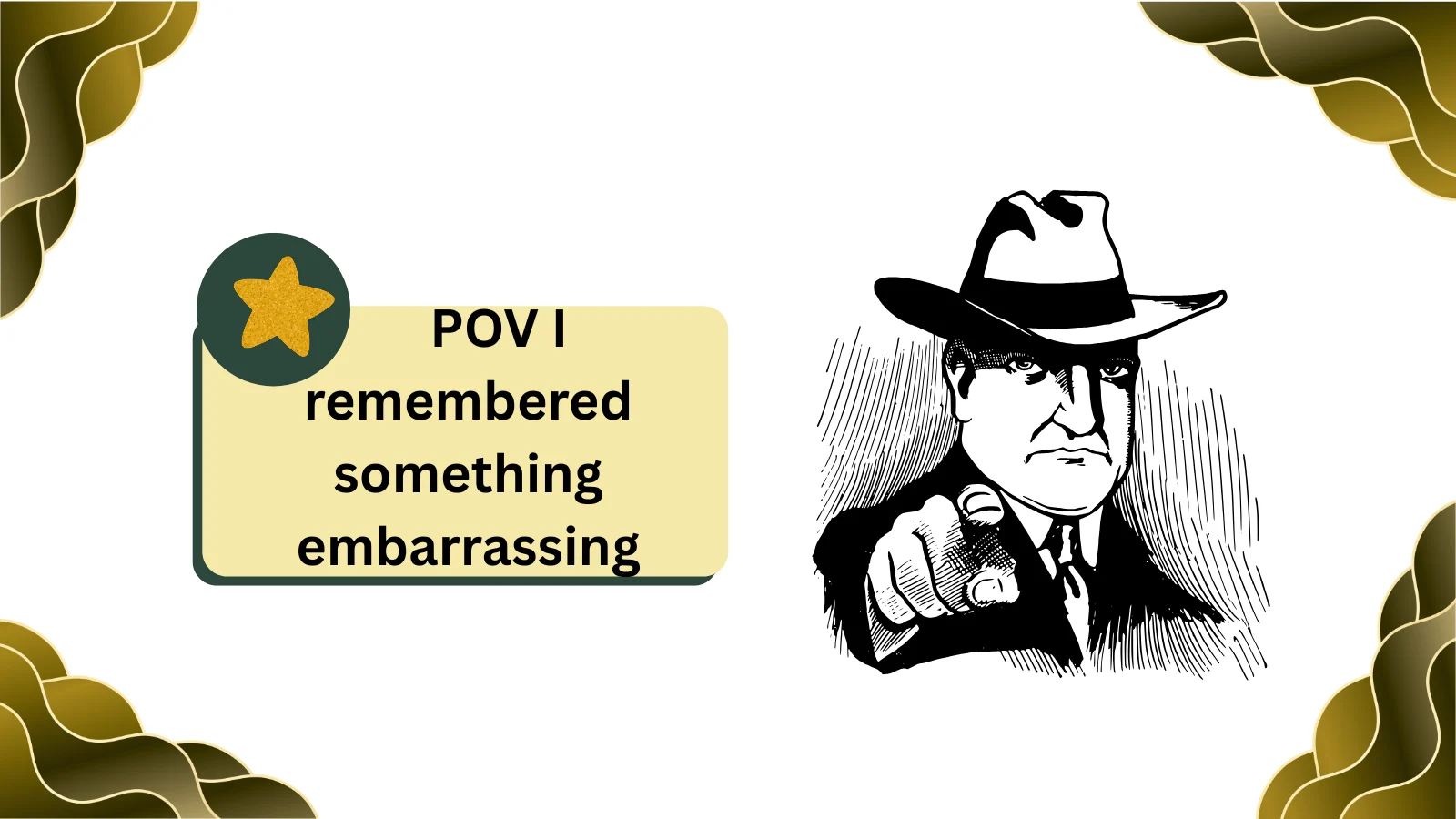
If you spend time on TikTok, Instagram Reels, Snapchat, or texting friends, you’ve probably seen someone start a message or caption with “POV.”
In today’s digital communication world, POV has evolved far beyond its original definition and become a powerful piece of internet slang.
This guide breaks down the POV meaning in chat, how Gen Z uses it in texting, its literal roots, real message examples, and how it fits into modern social media culture.
What Does POV Mean in Chat?
In texting slang and internet slang, POV means “Point of View” and is used to place the reader directly into a scenario, emotion, or moment as if they’re experiencing it themselves. It’s usually metaphorical rather than literal and helps tell mini-stories in chats, memes, and social media posts.
Literal Meaning of POV
Literally, POV stands for Point of View.
It originates from filmmaking, photography, and storytelling, where it describes the perspective from which a scene is shown or narrated. For example, a movie shot from a character’s eyes is called a POV shot. Over time, the term moved from technical language into everyday digital conversations.
How Is POV Used as Slang Online?
As slang, POV is a social media expression that frames a moment, emotion, or relatable experience. Instead of describing something directly, users invite others to step into the situation.
On platforms like TikTok, Discord, Instagram, and group chats, POV often introduces:
- Funny situations
- Emotional moments
- Awkward scenarios
- Relatable life struggles
It’s commonly used in a humorous, ironic, or dramatic tone.
Examples of cultural usage include:
- Creating mini storylines
- Setting a mood instantly
- Making memes feel personal
In digital communication, POV works as emotional slang that makes content feel immersive.
Is POV Commonly Used in Texting?
Yes POV is extremely common in modern texting and social media, especially among Gen Z and younger millennials.
It’s most popular on:
- TikTok captions and videos
- Instagram Reels
- Snapchat stories
- Group chats
- Twitter/X memes
While it started in video content, it’s now fully integrated into everyday text messages to quickly describe situations without long explanations.
Examples of POV in Text Messages
Here are realistic, modern chat-style examples:
1.
POV: you finally reply after disappearing for 3 days
2.
POV you said “I’m fine” but you’re not fine at all
3.
POV: it’s 2am and you’re overthinking everything
4.
Friend: why are you quiet today
You: POV I remembered something embarrassing
5.
POV: when your alarm goes off in the best part of the dream
6.
POV you open the fridge hoping new food appears
7.
Caption: POV you’re pretending to be productive but scrolling
These examples show how POV frames a relatable emotional or funny situation instantly.
Similar Slang Words or Expressions
Some slang and digital expressions that serve a similar purpose include:
- Relatable – highlighting shared experiences
- Mood – expressing an emotion everyone feels
- That moment when… – setting up a scenario
- Storytime – introducing an experience
- Core memory unlocked – recalling something emotional
All of these help describe feelings or situations quickly in online communication.
POV vs Similar Terms
POV vs Mood
POV sets a full scenario, while mood just labels an emotion. POV is more immersive and storytelling-based.
POV vs Relatable
Relatable describes connection after the fact. POV actively places the reader inside the moment.
POV vs Storytime
Storytime usually leads into a long explanation. POV delivers the feeling instantly in one line.
Is It Formal or Informal?
POV is strictly informal.
It’s appropriate for:
- Text messages
- Social media
- Memes
- Online conversations
It’s not suitable for:
- Professional emails
- Academic writing
- Business communication
In formal settings, POV should be written out as “point of view” if needed at all.
Frequently Asked Questions
Is POV Gen Z slang?
Yes, while POV existed before, Gen Z popularized it as internet slang on TikTok and social media. They turned it into a storytelling tool used in texting, memes, and digital content to express emotions and relatable situations quickly.
Is POV trending on TikTok?
Absolutely. POV is one of TikTok’s most common caption styles. Users frame skits, emotional clips, and funny moments using POV to instantly create context and pull viewers into the experience.
Can POV refer to a person?
Not directly. POV doesn’t describe a person but a perspective or situation. However, it often implies the viewer or reader is the person experiencing the moment being described.
Is POV sarcastic?
It can be. Many people use POV humorously or ironically, especially in memes. But it can also be sincere, emotional, or dramatic depending on the situation.
Is POV offensive?
No, POV itself is neutral and not offensive. It simply frames experiences or emotions. Any offense would come from the content following it, not the term itself.
Is POV commonly used in texting?
Yes, it’s extremely common in casual digital communication. It’s now a normal part of online slang and shows up daily in chats, captions, and memes.
Does POV always describe something funny?
Not always. While many uses are humorous, POV is also used for emotional, sad, awkward, or nostalgic moments.
Quick Summary
- POV means “Point of View” in texting slang and internet culture
- It places the reader inside a moment or emotional situation
- Common on TikTok, Instagram, Snapchat, and chats
- Used humorously, emotionally, or ironically
- Informal and meant for digital communication
One-sentence definition:
POV in chat is an internet slang term meaning “point of view,” used to frame a relatable or emotional situation as if the reader is experiencing it themselves.
Final Thoughts
The POV meaning in chat shows how traditional language evolves through social media and texting culture.
What started as a filmmaking term is now one of the most powerful storytelling tools in internet slang.
Whether it’s funny, awkward, emotional, or painfully relatable, POV lets people communicate experiences instantly making conversations more engaging in today’s fast paced digital world.
Leave a Reply